Human Lens
Independent Research Paper | 5,000 Words
The Institutionalization of Feminized Migrant Labor in the Philippines and Its Impacts on Families
For decades, labor migration has been one of the Philippines' most significant development strategies, creating economic opportunities for millions of families through overseas employment.
This research examines how the institutionalization of female labor migration influences family relationships, caregiving structures, and gender roles. By combining perspectives from development economics and sociology, the paper explores how migration creates opportunity while also transforming the emotional and social fabric of family life.

Research Question
How has the institutionalization of female labor migration in the Philippines reshaped family relationships, caregiving, and gender roles?
Research Outcomes
- Won the session’s Best Presentation Award & Presented findings at the 5th International Conference on Women & Gender Studies 2026
- Published in Critical Debates in Humanities, Science and Global Justice Journal, 2026
Area of Study
- Sociology
- Development Economics
- Migration Studies
- Gender Studies
- Public Policy
Why This Research?
Before this became a research paper, it was a personal question.
Growing up in Singapore, Grace, our Filipino domestic helper, was more than someone who worked in our home. She became a second mother who played an important role in my childhood. As I grew older, I began to understand that while working overseas created opportunities for her family in the Philippines, it also meant years of separation from the people she loved most.
That contradiction stayed with me.
Migration created economic opportunity, yet it also came with emotional and relational costs that were rarely discussed. I wanted to understand how a system celebrated for improving livelihoods could also reshape families, caregiving, and human relationships. This question became the foundation of my research.

FIELD RESEARCH IN
DEVELOPMENT ECONOMICS
Research under Professor Dean Karlan, Northwestern University, Professor of Economics & Finance and Co-Director of the Global Poverty Research Lab

01
Research Focus
Explored the feasibility of capital grants for small and medium-sized enterprises (SMEs) in Malawi through a randomized controlled trial (RCT) study.
02
Field Research
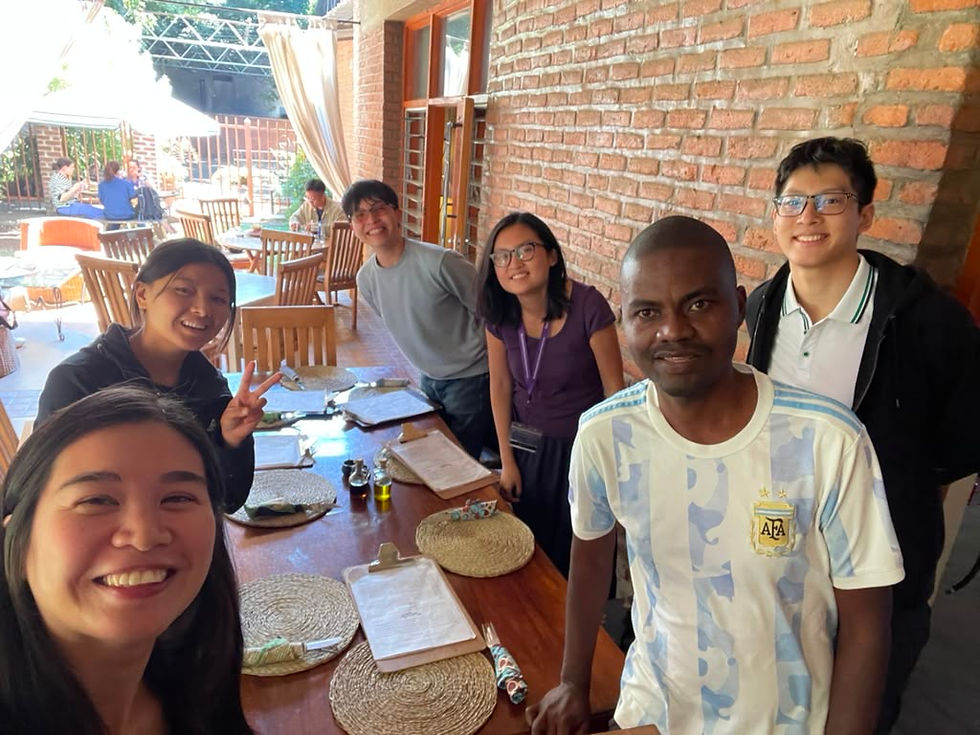
Collaborated with a nine-member field team to conduct qualitative and quantitative interviews, surveying 95+ firms across Malawi.

03
Economic Analysis
Analyzed business growth constraints and explored the potential microeconomic and macroeconomic impacts of capital grants.